Small Room Guide
Best Desks for
Small Spaces
By DeskDNA Editorial Team · Reviewed May 2026 · How we test
The right desk for a small room depends on one question: do you need to reclaim the space after work? Here are the four best options, compared side by side.

Affiliate disclosure: DeskDNA earns a small Amazon commission on qualifying purchases through “Shop” links on this page, at no extra cost to you. Commissions do not influence which products we recommend — see our editorial methodology.
Desk Types Compared
Wall-Mounted Folding Desk
Footprint: 0 sq ft when folded · Best for: Studios and bedrooms with no permanent space
$80–$160
Shop ›Pros
- ✓Takes zero floor space when folded
- ✓Mounts at any height
- ✓Forces a clear "work done" ritual when you fold it
Cons
- ✗Limited depth (12–18")
- ✗Not ideal for dual monitors
- ✗Requires wall mounting (drill needed)
Compact Standalone Desk (40"×20")
Footprint: ~5.5 sq ft · Best for: Small bedrooms with a permanent desk spot
$80–$180
Shop ›Pros
- ✓No installation required
- ✓Stable surface
- ✓Enough room for a monitor + keyboard
Cons
- ✗Can't be folded or removed easily
- ✗Limited storage
- ✗Narrower than you'd like for dual screens
L-Shaped Corner Desk (47"×47")
Footprint: ~7.7 sq ft · Best for: Bedrooms with an unused corner
$150–$280
Shop ›Pros
- ✓Most surface area per sq ft of floor space
- ✓Dual-monitor ready
- ✓Built-in cable management at the join
Cons
- ✗Fixed in the corner — hard to rearrange
- ✗Minimum room size ~9'×9'
Floating Shelf Desk (wall-mounted, no legs)
Footprint: 0 sq ft (wall-mounted) · Best for: Tiny rooms, standing-desk fans, minimal aesthetic
$60–$120
Shop ›Pros
- ✓Completely clear floor under the desk
- ✓Very clean look
- ✓Depth customisable by shelf choice
Cons
- ✗Requires wall studs for safe mounting
- ✗No under-desk storage
- ✗Not height-adjustable
Plan Comparison
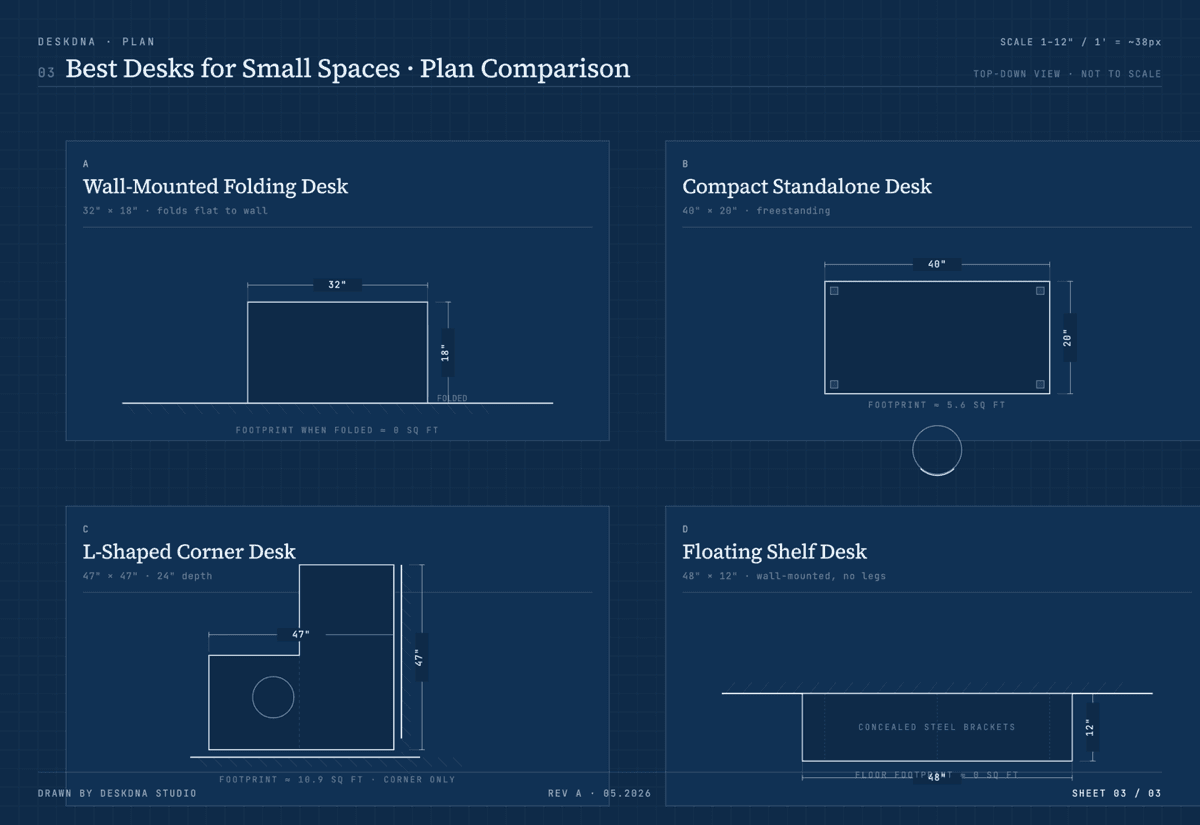
Top-down footprint of each desk type drawn to the same scale — so you can see exactly how much floor space each one claims.
How to Size a Desk for Your Room
Minimum depth: 20"
You need 20" to fit a monitor at arm's length. Anything shallower and the screen is too close.
Minimum width: 40"
For a single monitor + keyboard setup. Add 12–14" per additional monitor.
Height: 28"–30" for seated
Standard desk height. Adjust for your own body — elbows should be at a ~90° angle when typing.
Leave 24" clearance in front
You need room to push the chair back. Less than 24" and a room feels claustrophobic.
Measure twice, buy once
Measure your available wall length and depth before choosing. Note door swing arcs — they eat more floor space than people expect.
Frequently Asked Questions
What is the smallest functional desk size?
A 36"×18" surface is the absolute minimum for laptop-only work. For a monitor setup, 40"×20" is the smallest you should go — anything smaller means your monitor is either too close or hanging off the edge.
Should I get a folding desk or a corner desk for a small room?
Depends on whether you want to reclaim the space at night. If you live in a studio and your desk area doubles as living space — folding desk. If you have a dedicated bedroom office corner — corner desk gives you far more surface area.
Are standing desks too big for small spaces?
Fixed-height standing desks are compact and affordable. Electric standing desks need 24–30" of wall depth when raised for clearance — fine for most rooms. The motor and frame add ~2" to the desk depth, which matters in tight spaces.
What desk works best in a rental (no wall drilling)?
A compact standalone desk or an L-shaped corner desk — both freestanding, no installation. Wall-mounted and floating desks require drilling into studs, which most landlords allow with spackle repair on move-out, but check your lease first.
Related Guides
Best Desks for Home Office
Standing Desk vs Regular Desk
Remote Work Setup: Complete Guide
Not sure which desk is right for you?
Our setup generator asks for your room dimensions and gives you a specific desk recommendation.
Build My Setup